After a frightening health emergency and a hospitalization, a Texas man discovered that intensive lifestyle changes—supported by a lifestyle medicine care team—could help him put type 2 diabetes into remission and reclaim his quality of life.
Randy was packing for a trip on Jan. 6, 2023, when his vision grew blurry. He felt strange in a way he couldn’t quite explain. Over the holidays, the 64-year-old retired engineer with prediabetes had lost weight and was using the bathroom frequently, but he hadn’t been too concerned. Now, standing in his Highland Village, Texas home, it was clear that something was very wrong.
His wife called urgent care and was told to take him straight to the emergency room.
At the hospital, the cause was revealed: Randy’s glucose measured 886 and his A1c level had rocketed to over 10%. He was admitted immediately—the first time he’d ever been a hospital patient in his life. Family members traveled in from Houston along with close friends from Austin and Tulsa. He was diagnosed with type 2 diabetes, which meant starting insulin injections right away.
“They told me I had to learn to do the injections myself, and I have a big phobia with needles,” Randy said. “I had to have everyone leave the room. This was a very traumatic experience as I sobbed quietly in my new reality.”
But the diagnosis did not become the life sentence it seemed. Instead, it led him to a lifestyle medicine-certified endocrinologist, Prasanthi Tondapu, MD, DipABLM, who began treatment and then enrolled him in a specialized program developed by the American College of Lifestyle Medicine (ACLM) called the Lifestyle Empowerment Approach for Diabetes Remission (LEADR).
Through the lifestyle changes he learned under Dr. Tondapu’s care, Randy, now 67, keeps his diabetes in remission without insulin injections. He has also reduced his dosages of blood pressure and cholesterol medications by 75% and 50%, respectively. He feels good, and he wants others with type 2 diabetes to know that it may be possible for them, too, to feel the same.
“I just can’t imagine what would have happened if I had blindly stayed on the path I was on,” Randy said. “That hospital stay shook me to my core, thinking that it could have been the end of the story if I had taken that extended road trip unbeknownst to me that I was on the cusp of a potential diabetic coma. Fortunately, it turned out to be the beginning of a much different one.”
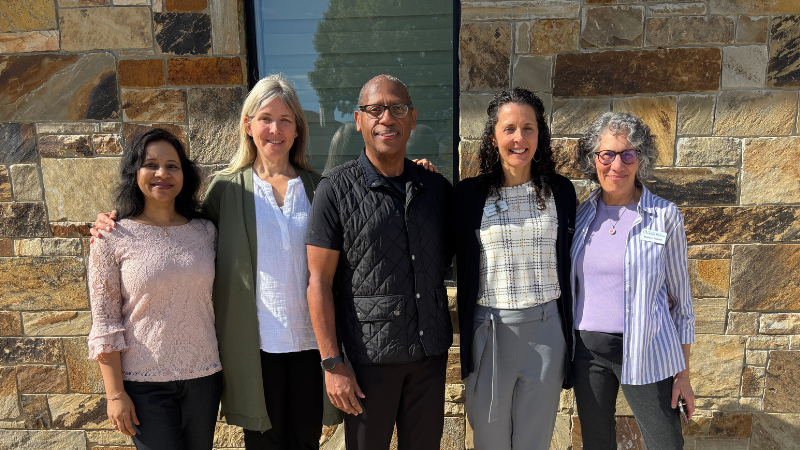 Dr. Tondapu (far left) and Randy (center) with members of the ACLM research team.
Remission through lifestyle change
Randy was about a year into his type 2 diabetes diagnosis when his primary care physician gave him a flyer for the LEADR program led by Dr. Tondapu that raised the possibility of putting type 2 diabetes into remission through lifestyle interventions. Randy started taking a full dose of a GLP-1 prescription to manage his diabetes but liked the idea of learning to adopt an eating pattern to treat his diabetes without complicated calorie counting, as well as working toward a healthier weight and improving his energy levels.
LEADR is a 12-week lifestyle medicine intervention delivered through a shared medical appointment (SMA) model, where patients receive care, education, support, as well as help setting goals and overcoming barriers in a group setting. It includes practical tools and a reimbursable step-by-step guide for clinicians to treat type 2 diabetes with a goal of disease remission.
During the program, participants like Randy learn the truth behind common nutrition myths, tips for eating and shopping on a budget and how to incorporate more whole grains, beans and other nutritious foods into their eating patterns. They learn how to prioritize restorative sleep, as well as increase physical activity in safe and sustainable ways.
Dr. Tondapu said when she met Randy, “He told me he didn’t want to end up in a nursing home soon or feel like he had become a burden to anyone. And he was ready to make some big changes.”
Rethinking food, culture and long-held habits
Initially, Randy was leery of the program’s emphasis on whole-food, plant-predominant eating patterns. His family is from southern Louisiana, so Randy liked Cajun food and big family gatherings. But he estimates that 90 percent of the men in his family died in their 60s from heart failure or other chronic diseases.
Then LEADR participants watched the movie “Forks Over Knives,” which examines a whole-food, plant-predominant eating pattern to treat and prevent chronic diseases. As an engineer, Randy is a data-driven person and evidence-based research catches his attention. Seeing the data presented in the movie made him mindful of the impact food has on health. Dr. Tondapu also invited chefs to sessions to introduce participants to foods they had never tried.
To counter a lifelong sweet tooth, Randy now reaches for fruits and nuts. He has removed about 90 percent of red meat from his diet. Beans have become a staple in meals at Randy’s home and a dietitian helped him identify frozen meals that contain healthful ingredients such as quinoa and kale.
“I heard quinoa and kale, and I thought ‘no way,’” he said, laughing. “But I have developed a taste for it because those things can be prepared in a way that’s very flavorful.”
He still allows himself occasional treats–a granola bar with some processed sugar, for example. Instead of fast-food hamburgers and fries, a meal out now is likely a chicken and beans bowl from Chipotle. Using a Dexcom continuous glucose monitoring tracker provided through LEADR, he checks his blood sugar immediately after eating something to understand the food’s impact. Again, seeing the data helps support his decisions.
“I tried to establish my culture of eating where I am making healthy choices while still being able to eat things that I like,” he said. “And something very important I have learned is that I do not have to be perfect for these lifestyle changes to work.”
Increasing his physical activity
Randy stopped taking GLP-1 medication about three months after starting LEADR. He set a goal to reach his college weight of 210 (he weighed 239 before his hospitalization) and achieve an A1c of 5.7 or less. He has largely achieved both. His next goal is to reach his high school weight of 190 but, more importantly, his goal is to maintain mobility, flexibility, and independence for as long as he can.
Prior to his hospitalization, he averaged 33 minutes of movement a day. When he started LEADR, he upped that to 77 minutes per day. In 2025, he reached 111 minutes a day through activities, such as playing pickleball.
Randy’s lifestyle changes have been adopted by family members as they witnessed his health transformation. Randy’s son told him, “No way I’m going to let you outdo me,” and he embarked on his own lifestyle change journey by losing 58 pounds in one year.
A different physician-patient relationship
Randy said his experience with Dr. Tondapu is different than his relationships with previous doctors. “I have never had someone in the medical profession spend more time with me than Dr. Tondapu,” he said “I have spoken with her more during the last two years than I probably have other doctors in my entire life. She has really changed my life.”
Dr. Tondapu said Randy approached his lifestyle behavior treatment plan as she hopes all patients will: like a prescription.
“People take their pills because that’s what the doctor prescribed,” she said. “Follow the prescription and you will see the benefits. That’s why I am very proud of Randy for applying what he has learned as a lifestyle prescription and making these changes to keep his diabetes in remission. He is proof it can be done.”
Instead of needles and lost quality of life, Randy looks forward to a brighter future–attending football games at his alma mater, the University of Texas, and continuing get-togethers with old high school buddies. But mostly, he is thankful to be healthy enough to care for his family, supporting loved ones near and far when they need it.
“My biggest fear is that I will slip and fall back into old habits,” he said. “But my son and I have a thing we say to each other: ‘We’re not going back!’”
Redefining What’s Possible in Type 2 Diabetes
Randy’s story is part of Project Remission, a digital series from ACLM and Content With Purpose highlighting how lifestyle medicine is helping make type 2 diabetes remission possible. Explore the series, learn more, and help us share a new vision for diabetes care.