La Comida Como Medicina demonstrates how culturally and spiritually grounded lifestyle medicine can empower Latino families to improve health through food, movement, and community. By centering culture, language, and faith, this bilingual program shows that lasting behavior change is possible when health education honors lived experience.
Health begins at the table. Yet for many Latino families in the United States, health education often arrives without relevance to culture, faith or with a sense of hope. The program I founded, La Comida Como Medicina (Food as Medicine), in Boston was born from a simple but powerful belief: healing occurs when food, culture, and purpose come together.
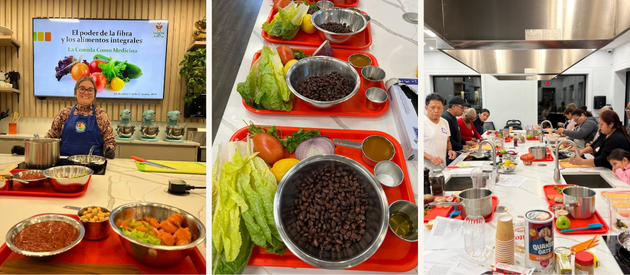
As a nurse practitioner working with Latino patients in primary care, I observed recurring challenges—chronic disease, food insecurity, and a growing disconnection from traditional cultural dietary patterns. In response, I began leading small, plant-based cooking sessions using familiar and accessible ingredients, such as beans, lentils, rice, and fresh produce from local food pantries. Over time, these sessions evolved into a structured, six-week bilingual program grounded in lifestyle medicine and community engagement.
A culturally tailored approach
La Comida Como Medicina integrates culinary medicine, lifestyle education, movement, and group reflection. Each session focuses on a specific health topic—including inflammation, gut health, blood sugar balance, and heart health—while incorporating culturally familiar recipes and practical cooking skills.
Sessions also include gentle movement, such as stretching, guided walking, or culturally relevant dance. Each class concludes with a “Pensamiento Nutritivo,” a short reflective message or biblical verse that connects physical health with emotional and spiritual well-being.
This culturally and spiritually grounded approach has resonated strongly with participants, reinforcing the idea that health is not only physical, but also emotional, social, and spiritual.
Although formal clinical outcomes were not collected, participant feedback and program observations suggest meaningful behavioral change. Across multiple cohorts, participants reported:
- Increased consumption of plant-based meals
- Reduced intake of processed foods
- Improved confidence in cooking with vegetables
- Greater involvement of family members in meal preparation
Participants also described increased motivation, emotional well-being, and a renewed sense of purpose around their health.
One participant said “Aquí no solo aprendí recetas. Aprendí a cuidarme con esperanza,” or, in English, “Here I didn’t just learn recipes. I learned to care for myself with hope.”
In addition, facilitators observed strong social engagement and community-building. Participants frequently arrived early to assist with preparation and remained after sessions to share personal progress. Some participants have extended their learning into their communities, leading informal demonstrations and discussions within their own networks.
Bridging community and clinical practice
The program has been implemented in collaboration with community and clinical partners, including La Colaborativa Teaching Kitchen and the MGH Revere Teaching Kitchen. These partnerships have enabled the delivery of accessible, low-cost programming using pantry-based ingredients, making healthy eating both realistic and sustainable.
The model also aligns with broader efforts to integrate lifestyle medicine into clinical care. Presentations at academic institutions, including Harvard School of Dental Medicine, have highlighted the potential of culinary medicine to bridge primary care, dental care, and community health.
A key insight from this work is that cultural identity is not a barrier to health—it is a powerful facilitator. When health education honors language, traditions, and faith, participants engage more deeply and sustain behavior change.
The most impactful sessions combined practical cooking, storytelling, reflection, and community connection. Participants felt seen, respected, and empowered—not instructed, but inspired.
When individuals are taught that their own food, culture, and traditions can be sources of healing, health becomes attainable and meaningful. La Comida Como Medicina demonstrates that integrating culture, community, and purpose into health education can lead to lasting change.
Expanding a community-based model
The next phase of La Comida Como Medicina includes strengthening partnerships, developing bilingual educational materials, and exploring opportunities for program expansion and formal evaluation.
There is a growing need for culturally tailored, community-based models of lifestyle medicine that address not only physical health, but also the emotional and social dimensions of well-being. This program offers a framework that can be adapted and scaled across diverse communities.
Culturally responsive curriculum and LEADR Initiative
For clinicians and health professionals interested in developing similar approaches, ACLM’s HEAL Initiative offers a place to learn, collaborate, and contribute to culturally responsive models of care. Through HEAL and the Culturally Responsive Taskforce, which is designed to support ACLM resource development, members can engage with peers, access practical frameworks, and help shape approaches that bring lifestyle medicine to life in diverse communities.
Take the next step
Join the HEAL Initiative
Be part of a members-only community advancing culturally responsive, community-engaged lifestyle medicine. Through HEAL, ACLM members collaborate, learn, and help shape models of care that honor culture, faith, and lived experience—like La Comida Como Medicina.