During ACLM’s national conference in Grapevine, Texas, lifestyle medicine clinicians with ACLM’s Health Equity Achieved through Lifestyle Medicine (HEAL) Initiative provided Dallas residents hands-on tools and local resources to overcome barriers to healthy eating.
Dozens of Dallas-area residents learned hands-on strategies for preparing nutritious meals without overspending during a special community workshop held alongside the American College of Lifestyle Medicine’s (ACLM) annual conference Nov. 16–19 in Grapevine, Texas.
With food prices remaining high and 17.4% of Dallas County residents experiencing food insecurity, the free session aimed to bring practical lifestyle medicine tools directly to a community facing barriers to healthy eating.
“Living Well: Eating Healthy on a Budget,” was organized through a partnership between ACLM’s Health Equity Achieved through Lifestyle Medicine (HEAL) Initiative, UT Southwestern Medical Center, and the Park South Family YMCA, which hosted the event at its south Dallas facility. Leaders from each organization emphasized that the collaboration was designed to expand access to reliable, evidence-based nutrition guidance.
David Bowman, MD, DipABLM, FACLM, director at the Center for Spiritual Health and Wellness in Washington D.C., and HEAL co-chair, said he had long wished to integrate community events into ACLM’s national conferences, which draw together thousands of lifestyle medicine clinicians from across the country and world. About 2,300 clinicians attended the 2025 conference in person, while another 2,700 joined virtually.
“It is important to me that the communities where we hold these conferences really benefit from all these national experts and their knowledge in lifestyle medicine,” Dr. Bowman said. “Health equity is getting the information to the people who need it the most.”
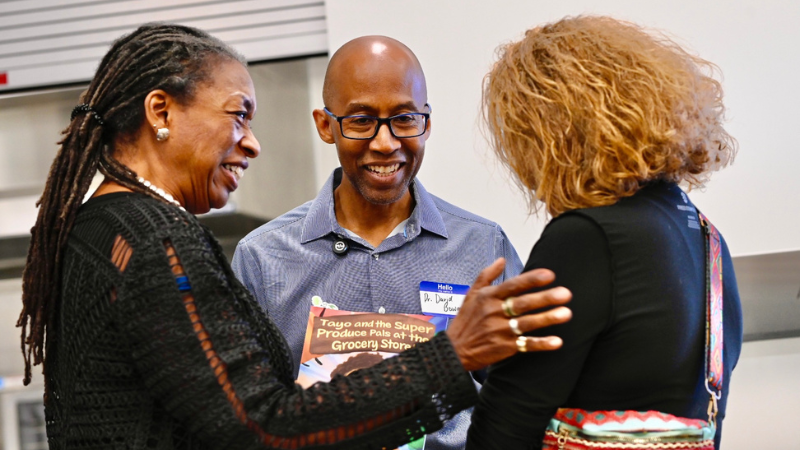 HEAL leaders led a book giveaway during the first-ever HEAL Service Day. Attendees with small children were gifted with “Tayo and the Super Produce Pals at the Grocery Store!,” a children’s book by author Dr. Bisi Alli that includes activities and tips to encourage everyone to eat healthy. Photos taken by Dr. Daniel Chen.
Live demonstrations and interactive tastings
Throughout the workshop, Dr. Bowman, and other HEAL leaders Meryl Fury, MS, RN, president and CEO of Plant Based Nutrition Movement in Village of Pleasant Prairie, Wis., and Daniel Chen, MD, FACP, DipABLM, lifestyle medicine program coordinator and internal medicine physician at Esperanza Health Center in Philadelphia, guided participants through live cooking demonstrations, interactive tastings, and discussions about stretching food dollars while prioritizing health. They highlighted the scientific evidence linking eating patterns to health and childhood development, while dispelling common myths—particularly that nutritious food is expensive, difficult to prepare or lacking flavor.
One slide showed colorful photos of meals such as lentil Bolognese and potato–chickpea curry, each costing between $1.50 and $3 per serving, illustrating that nutrient-dense eating can be both affordable and accessible. The tasting portion of the workshop demonstrated that nutritious food can also be delicious. Participants lunched on barbecue jackfruit sliders, slaw made from purple cabbage, zucchini and butternut squash, and a green banana salad.
Dr. Chen gave a live demonstration of how to make an easy and affordable whole wheat pasta salad with black beans, almonds, broccoli, peppers, red onion and other vegetables.
More than 15 volunteers served at the event, including ACLM Board of Directors member Josie Bidwell, DNP, FNP-C, DipACLM, FACLM, and Dharani Prathipati, MBBS, DipIBLM, who traveled from India to attend the workshop and conference.
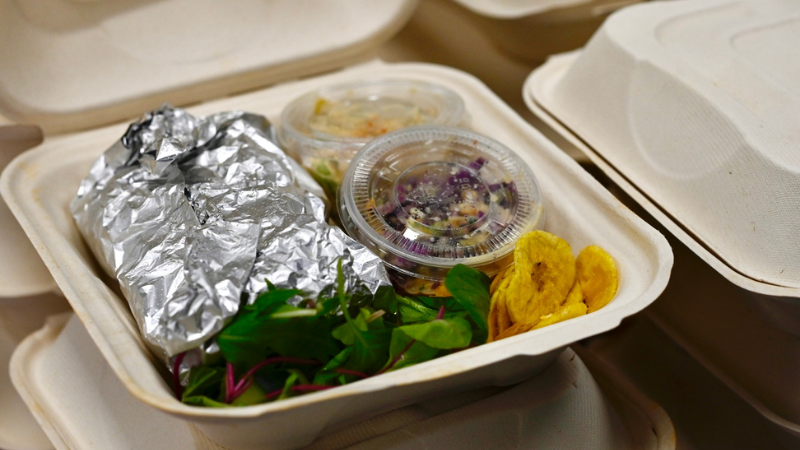 Participants had the opportunity to sample healthy and delicious plant-based food.
Healthy, affordable and delicious
The workshop offered fresh inspiration at an important time. Alisha Brown attended with her mother, Eva, who she said has long encouraged her to eat more healthful foods. Rising grocery prices, she said, have made creative approaches to healthy eating even more valuable.
“We do often eat meat, which can be expensive, so it’s great to see more recipes where you can sometimes replace meat with beans or another protein that is healthy and affordable,” Alisha said. “This is great information and all very easy to understand.”
For others, the workshop served as a motivating reset. YMCA member Sharon Lawson said that after moving from Connecticut to Texas, her eating habits changed.
“This is Texas—we eat a little differently here,” she said with a laugh. “It’s good motivation to learn a lot about cooking different ways and cooking different things. The food demonstrations were fantastic because you see it really isn’t that hard to prepare foods that are quite a bit healthier.”
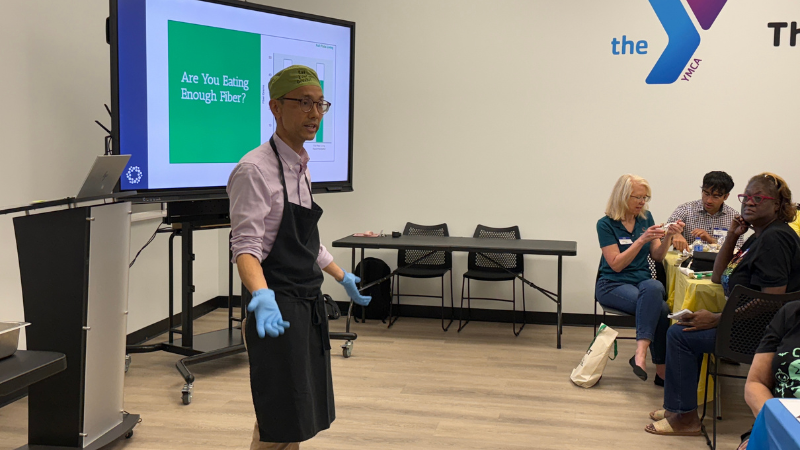 Dr. Chen gave a live demonstration of how to make an easy and affordable whole wheat pasta salad with black beans, almonds, broccoli, peppers, red onion and other vegetables.
Dr. Chen called the collaborative event a model for investment in culturally informed, local resources. The workshop “mobilized social capital and fostered community connections for health sovereignty,” he said. “We get to enjoy connecting with one another, talking about and revealing lifestyle medicine as a framework for hope and healing to those whom the system has traditionally marginalized and forgotten.”
Dr. Chen shared more about the importance of culturally relevant resources in a recent ACLM webinar. You can watch the full webinar below.
A key goal of the event was to ensure participants left not only with knowledge, but also with ongoing community support. Presenters introduced attendees to local programs and organizations working to improve food access, including Snack Lab, a community-based initiative that helps children explore healthy eating and cooking, and Grocery Connect, which designed and funded the Snack Lab initiative, that promotes community engagement and provides ingredients for snacks. A slide presented listed farmer’s markets in south Dallas.
Carolyn Mason, a college student who attended, said she was encouraged to learn how much activity is happening locally around improving community health.
“There is a lot more community activism on the topic going on than I realized,” she said. “It’s good information to know and great to see it happening.”
Fury said “Changing the trajectory of American adult and child health takes constant effort and unflagging teamwork. In that same way, lifestyle medicine is most impactful when offered in concert with local community-based organizations, and in settings that community members trust and find inviting. It is so rewarding that the first-ever HEAL Service Day did just that. We are already ready for the next one!”
HEAL your community with lifestyle medicine
Be part of a growing community of lifestyle medicine clinicians committed to delivering health equity where it’s needed most. Through HEAL, you’ll engage in community-driven initiatives, gain practical tools for empowering underserved populations, and collaborate with peers and partners to make a tangible impact.
Take the next step in turning your expertise into action—help HEAL communities thrive through evidence-based lifestyle medicine.